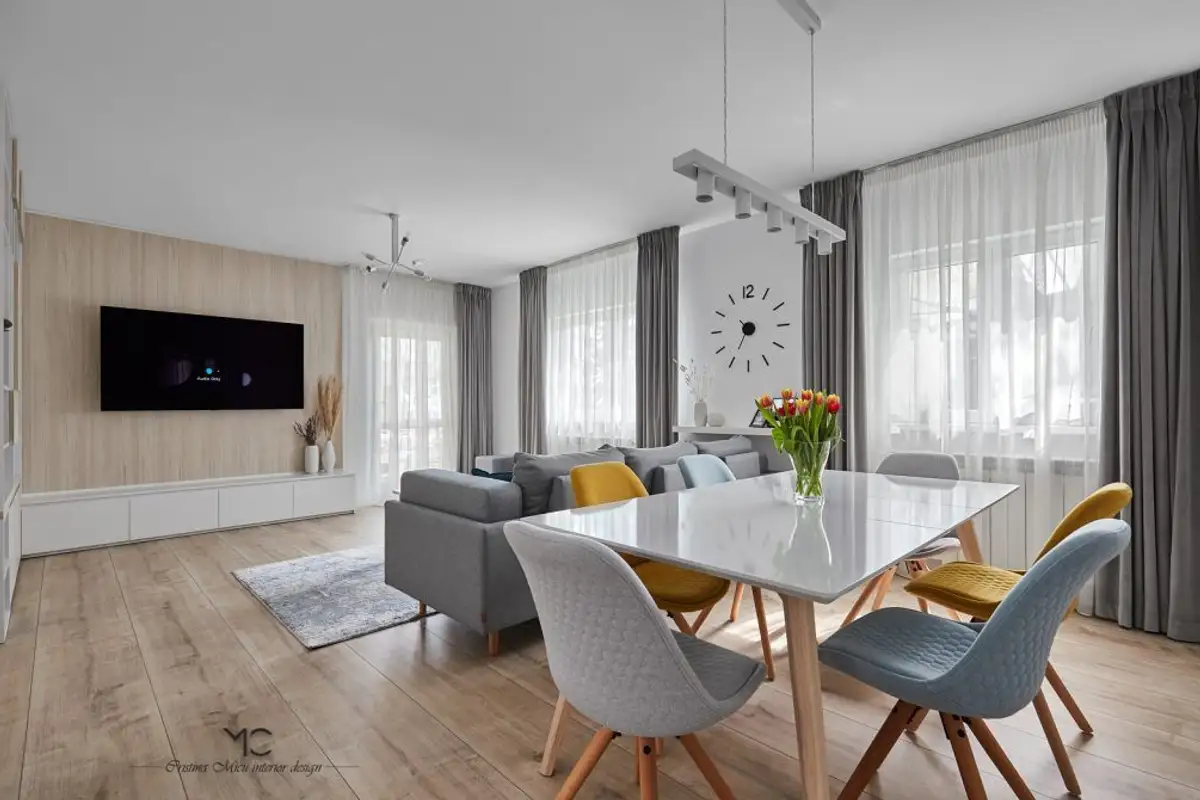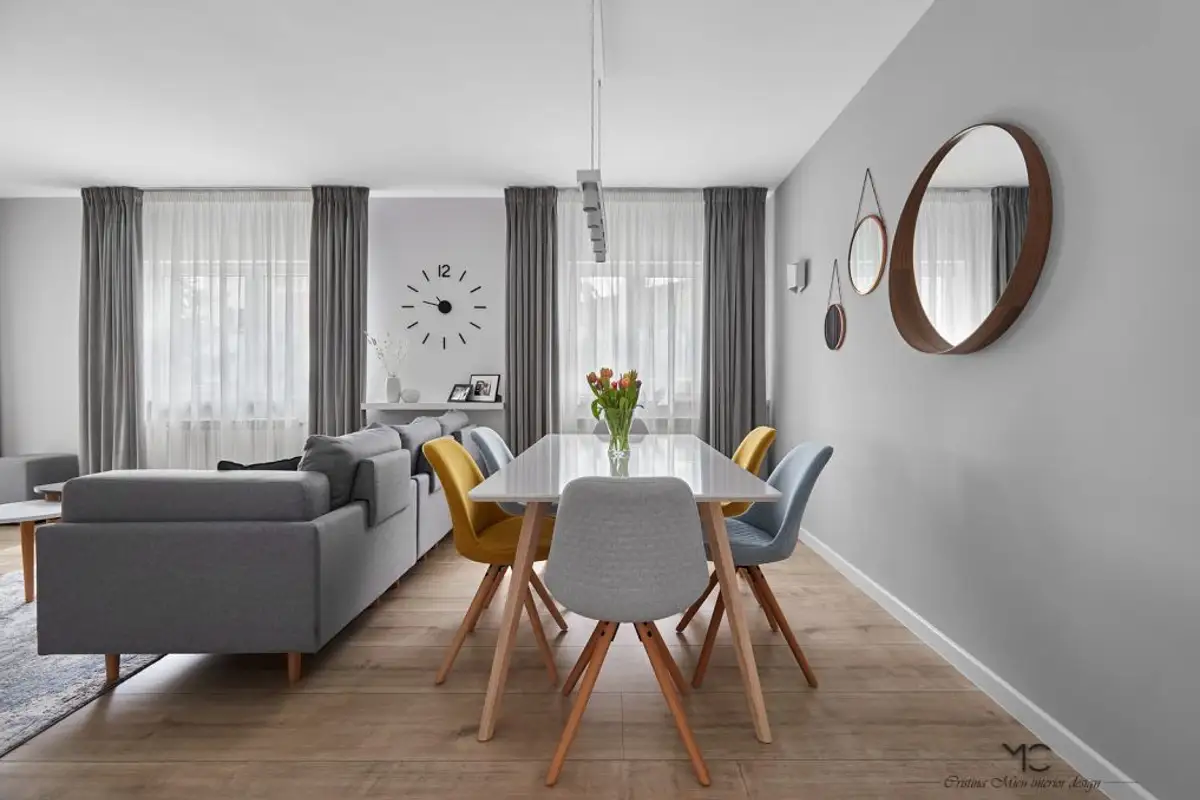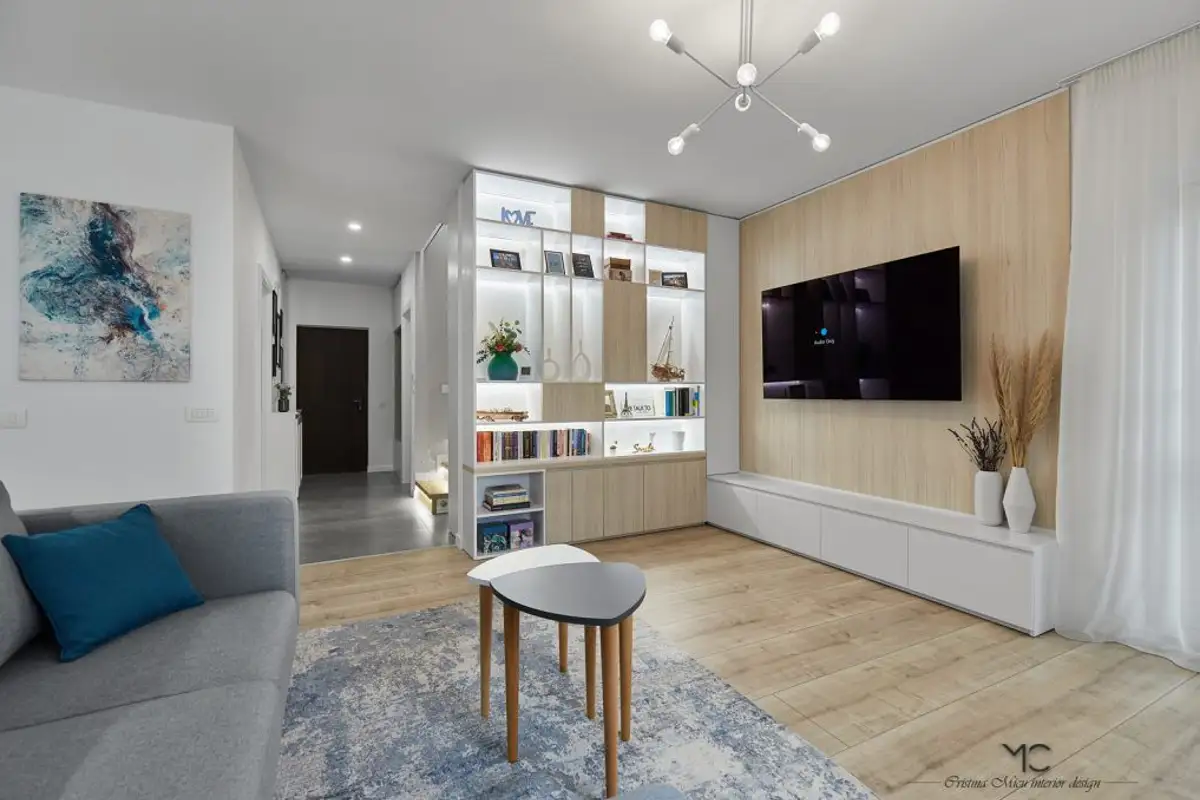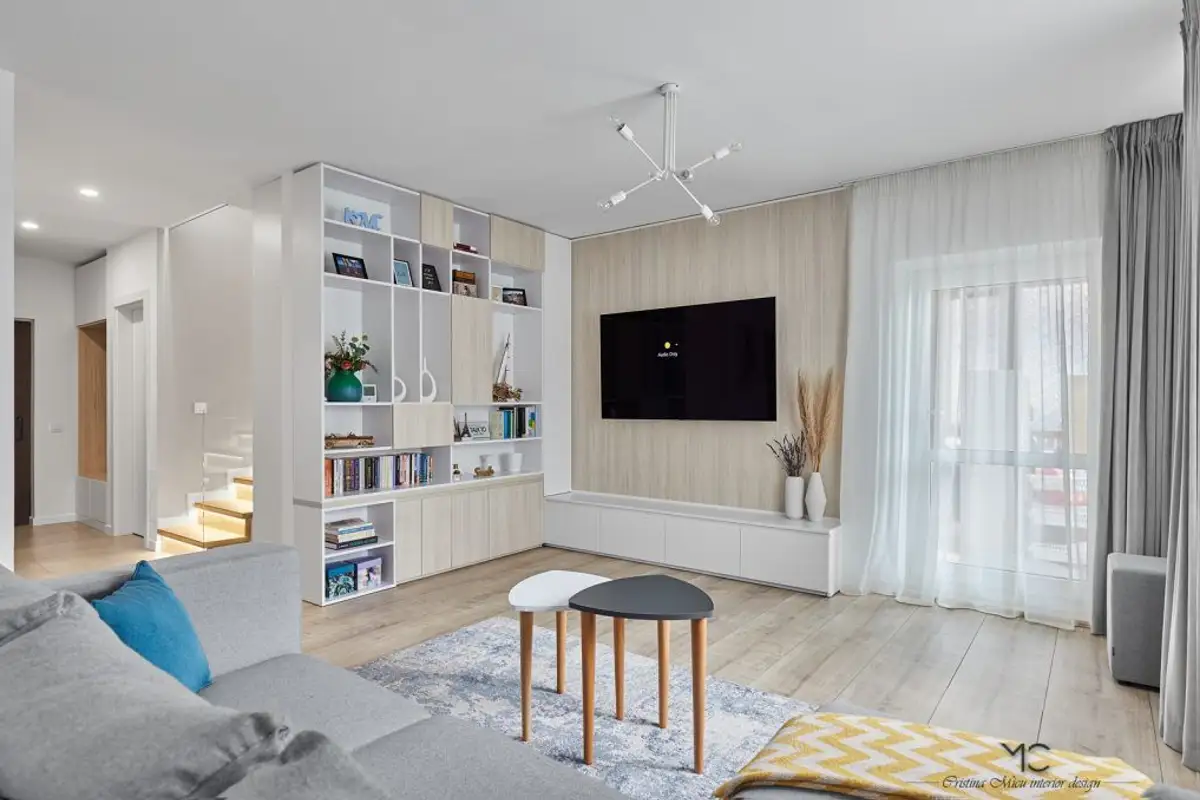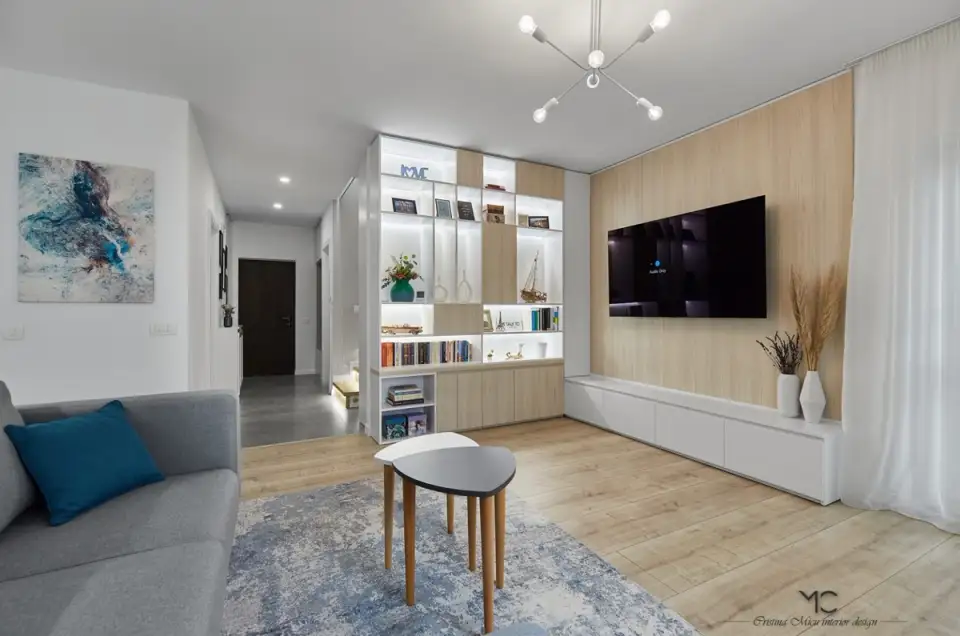
For the owners, a young couple from Bucharest, this is their first home purchased together. They lived for four years in the sparsely redecorated house before seriously considering major changes, prompted by the news that they were going to become parents.
The P +1 house was built in 2006 and has three bedrooms, a living room, kitchen, three bathrooms, within 106 sqm of usable space. The outdoor terrace and garden complement the interior comfort.
At the beginning of the renovation project, the dwelling was unrenovated, with old finishes, as it had not been renovated since being taken over from the developer in 2006, which was noticeable in places.
Apart from the placement of the central heating unit in the service bathroom (which somewhat hindered the desired furniture arrangement), the interior space was well-compartmentalized and the dwelling did not have any other disadvantages.
Cristina tells us that the biggest challenge and most expensive part of the project was actually planning: "I think I can call organization and project management costly, because we had a maximum of 4 months to complete the construction site, to hand over the house 'turnkey', in the conditions where the construction site started exactly during the lockdown period of the pandemic.
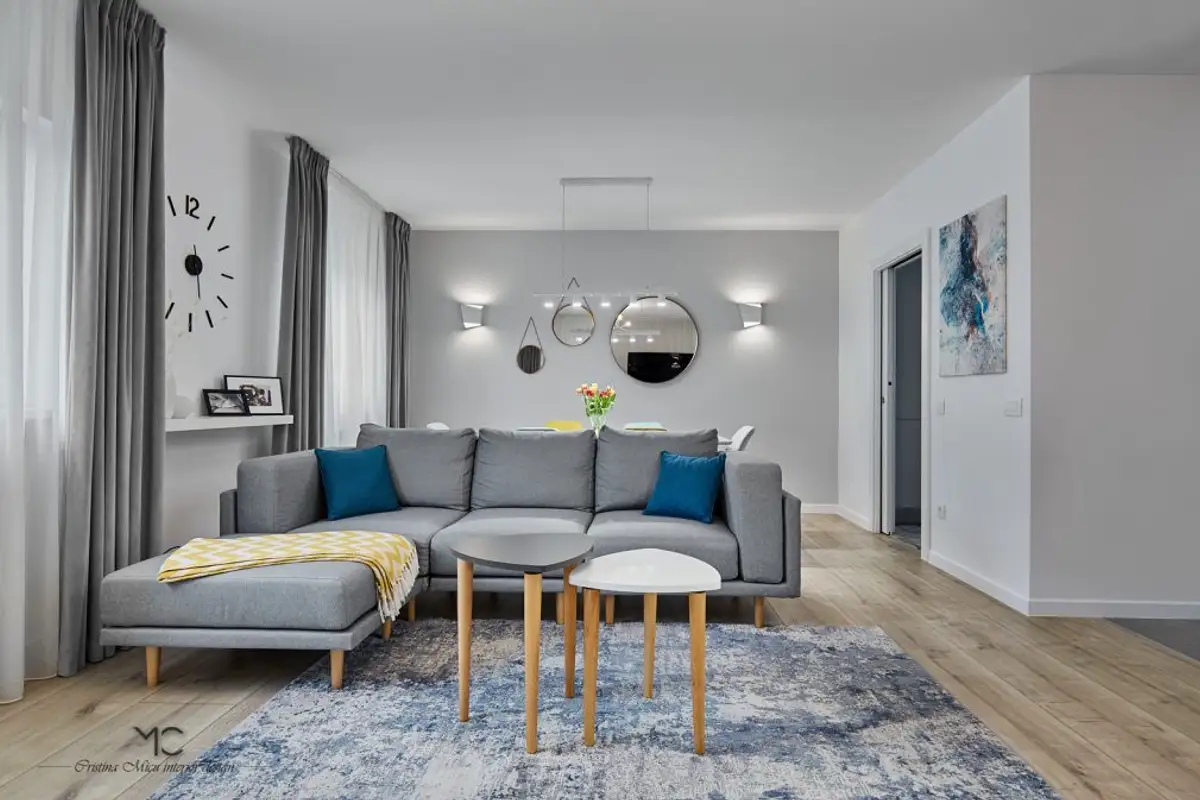
In terms of compartmentalization, there was only one intervention, at the common wall between the kitchen and living room. A sliding door was proposed to ensure a smoother flow of traffic and visually enlarge the space. To integrate that sliding door, it was necessary to demolish and rebuild the gypsum board wall.
The clients wanted a reorganization of the spaces and functions of the rooms to make the most of the available space and ensure the long-awaited comfort. The old master bedroom became the child's room and the old guest bedroom is now the master bedroom.
“The master bedroom is configured in the old guest bedroom. It stands out through the red accent wall complemented by the burgundy red bed, but both are tempered by the gray of the walls and the rest of the white elements. The dressing mirror offers a visual impact of enlarging the bedroom.
The initial finishes kept the parquet flooring and the stair treads finish, to which accent lighting (LED strips with sensor) was added. Otherwise, all finishes were replaced, and underfloor heating was also introduced on the ground floor.