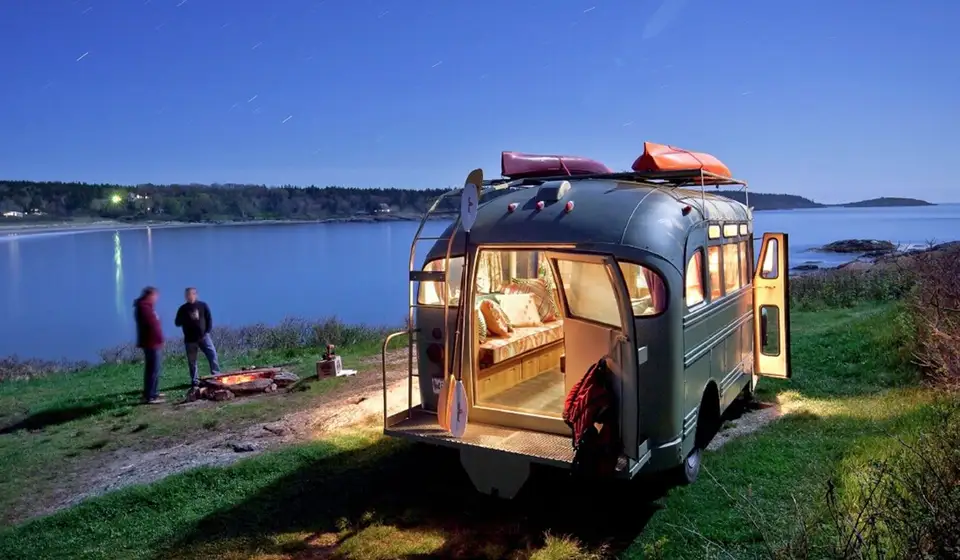
Americans from Winkelman Architecture transformed a non-functional minibus into a charming tiny house on wheels with a retro vibe reminiscent of the '60s. The architecture firm has other spectacular conversions in its portfolio, including cabins, treehouses, and other unique vacation getaways for nature lovers.
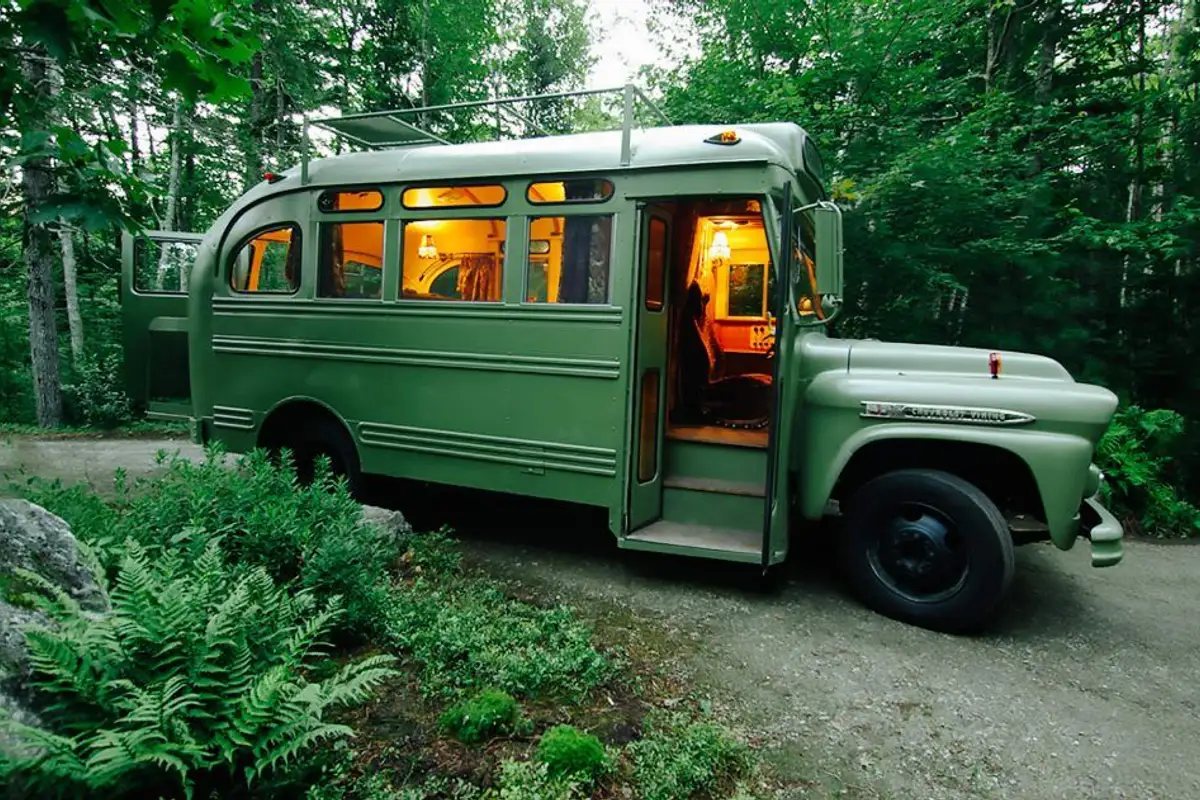
The 1959 Chevrolet Viking was found abandoned in a field by the team of architects and was rebuilt from scratch using recycled natural materials, including pine wood planks integrated as flooring.
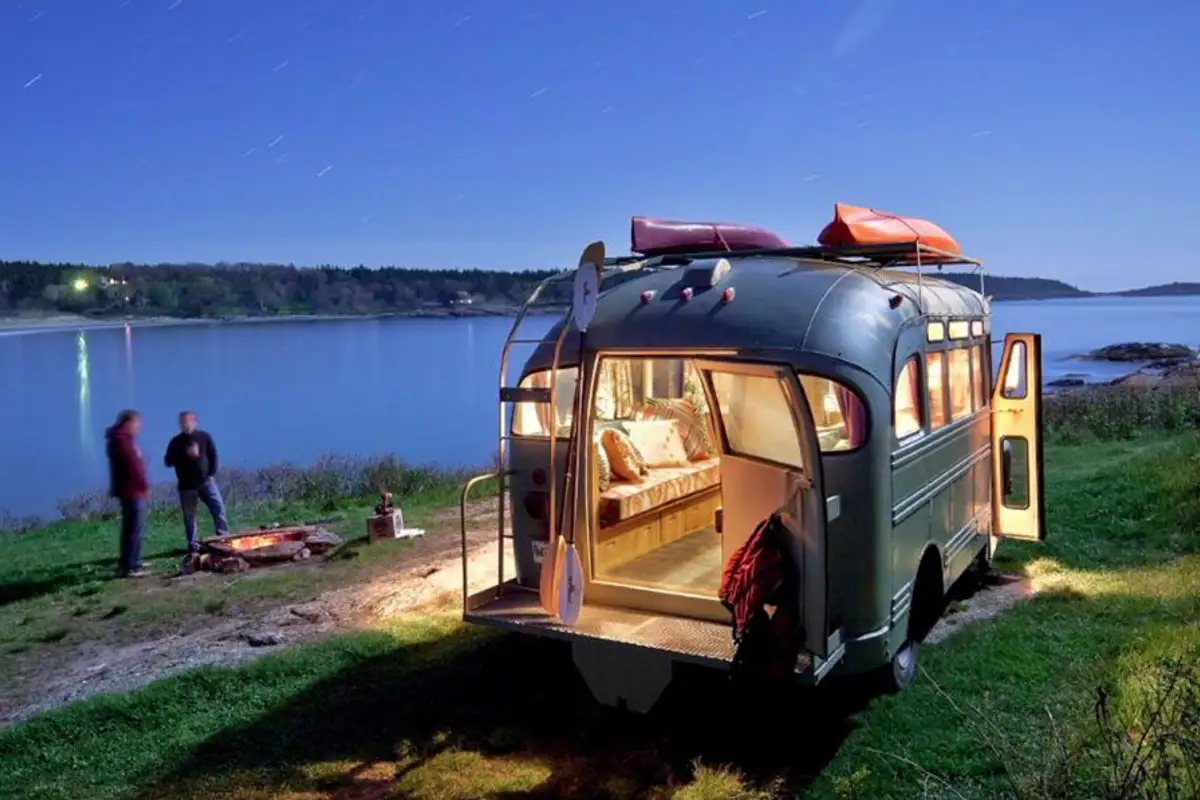
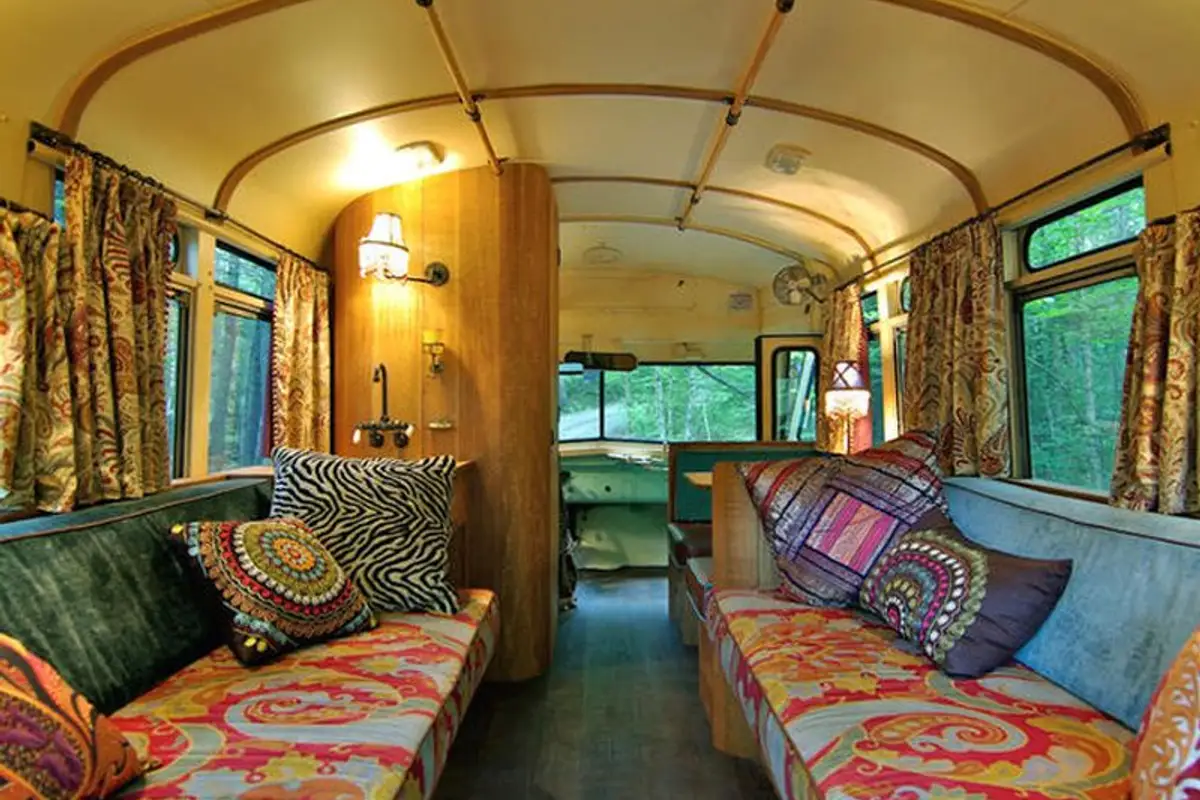
Inside, it can accommodate 12 passengers plus the driver, and for sleeping space, it can host two or three people. The sofas can be used as single beds or joined together to create a double bed. The interior is equipped with a toilet, sink, and electrical system.
The vehicle ingeniously combines design with a retro transportation style, successfully synthesizing American road trip culture.
The exterior of the Chevrolet was cleaned and painted in a vintage green hue, more fitting for its new function. The interior was compartmentalized into a living area with two sofas facing each other, which can become single beds or be joined to transform into a double bed. The lower part of these is made of wood and serves as storage.
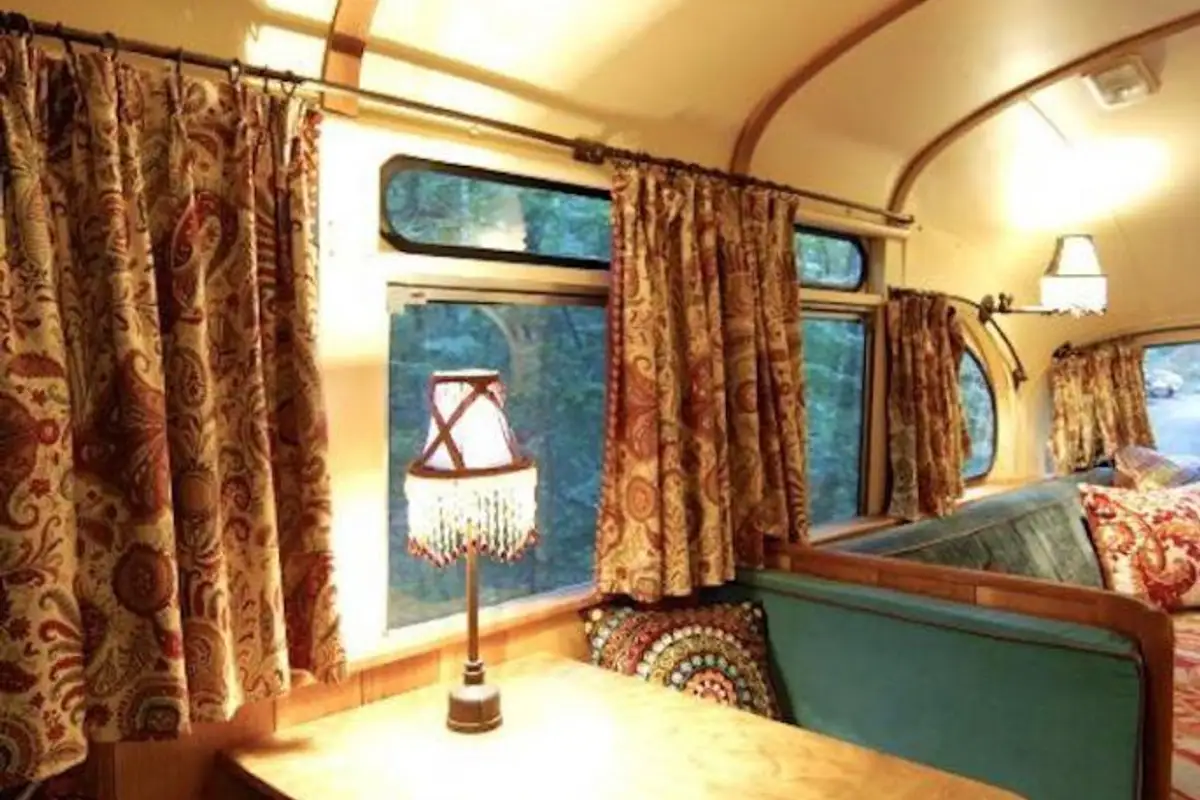
The textiles used are brightly colored, with decorative cushions featuring different prints that exude a bohemian, Moroccan vibe, complemented by lighting fixtures inspired by the Orient. Lampshades with multicolored beads and animal print patterns filter the light and create a warm, intimate ambiance suitable for travel stories.
The driver's seat follows the same theme, being entirely covered in a leopard print upholstery.
The windows are covered with drapes made of printed materials, matching those that cover the sofas. There are two benches positioned in a train carriage style, with a table placed between them, an ensemble that can serve for conversations or meals.