Creating a mini-ecosystem with aquatic plants can be an excellent way to add life and beauty to your home or garden. A mini-aquarium with plants is not only decorative but can also contribute to a healthier environment, helping purify the air and water. Here are the essential steps for building such a mini-ecosystem, both indoors and outdoors.
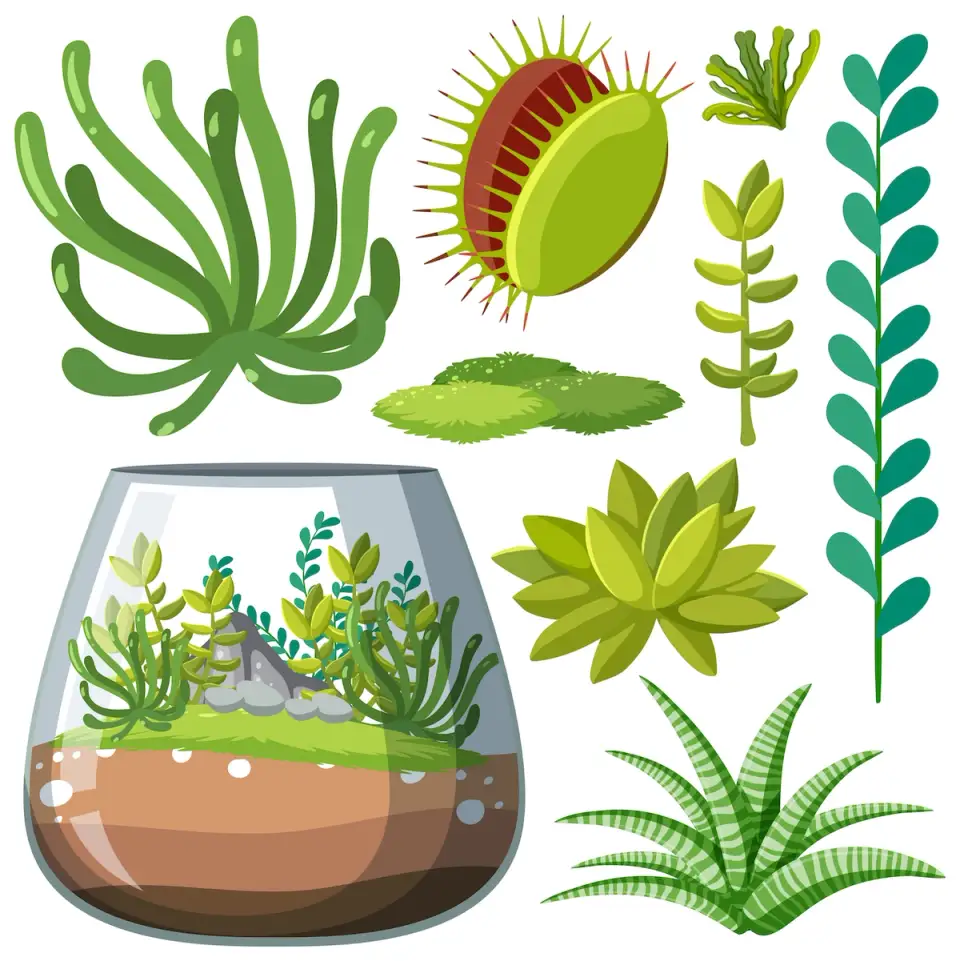
Various plants seamless pattern illustration 1. Choosing the right container
The first step in building a mini-ecosystem with aquatic plants is to choose a suitable container. You can use a small aquarium, a glass vase, or even a transparent plastic container, depending on the available space and personal preferences. It's important that the container is deep enough to allow the plants to grow and develop.
Also, make sure the vessel has a stable base and does not allow water leakage.
2. Creating a drainage layer
To ensure a healthy environment for the plants, it's essential to add a drainage layer at the bottom of the container. This will help prevent water stagnation and contribute to good water circulation. You can use fine gravel or decorative stones, which will function both as drainage and as a decorative element.
This layer should be approximately 3-4 cm thick.
3. Choosing aquatic plants
An aquatic mini-ecosystem needs plants that can live in water and are easy to maintain. Some of the best plants for such ecosystems are:
Duckweed (Lemna minor): a small plant that floats on the surface of the water, helping absorb nutrients and prevent algae growth.
Anubias: a hardy aquatic plant that can live entirely underwater and is perfect for small aquariums.
Sagittaria (Saggitaria subulata): plants that grow both underwater and at the surface, adding a natural look to the ecosystem.