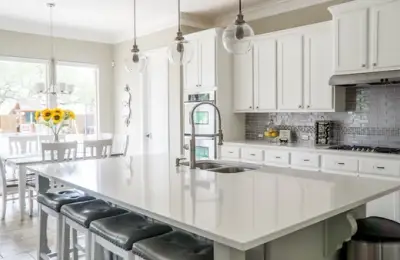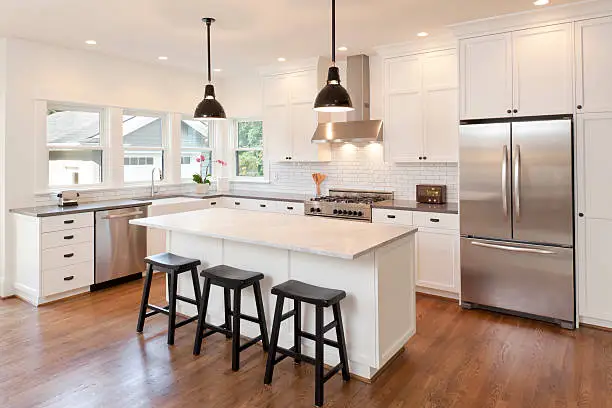
Choosing between a closed kitchen and an open space one can be a difficult decision, as both options have significant advantages and disadvantages.
Closed Kitchen:
Advantages:
Sound insulation: A closed kitchen isolates noises from cooking, dishwashing, and other activities, keeping the house quiet.
Odor control: The walls and door of a closed kitchen prevent food odors from spreading throughout the house.
Neat appearance: A closed kitchen can hide clutter during cooking, maintaining a cleaner and tidier overall look for the space.
Storage space: A closed kitchen can offer more hidden storage space, such as cabinets and shelves in the walls.
Disadvantages:
Limited space: A closed kitchen may feel smaller and more cramped, limiting the sense of space.
Lack of connection: A closed kitchen can create social isolation, separating cooking from other interactions in the house.
Reduced natural light: A closed kitchen may receive less natural light, requiring stronger artificial lighting.
Higher costs: Fitting out a closed kitchen may involve higher costs due to additional walls and a door.
Open Space Kitchen:
Advantages:
More space: An open space kitchen creates a feeling of greater space and openness, integrating it with the rest of the living area.
Social connection: It allows interaction with other family members or friends while cooking, creating a sense of conviviality.
Natural light: An open space kitchen benefits from more natural light, reducing the need for artificial lighting.
Lower costs: Fitting out an open space kitchen may involve lower costs, eliminating the need for walls and a door.