There are materials that go almost unnoticed for years, used more for technical purposes, hidden in structures or invisible layers, and then, at some point, they are rediscovered and brought to the forefront in a spectacular way. Epoxy resin is part of this exact category.
From a compound used in industry for protection, bonding, or insulation, it has become one of the most expressive materials in contemporary design. The transformation did not happen overnight but was the result of a meeting between technology, creativity, and an increasingly evident desire for personalization.
Today, epoxy resin is no longer just a material but a visual language, a form of expression that combines aesthetics with functionality in a hard-to-ignore way.
From technical material to artistic expression
The change came when designers and artisans began to look beyond functionality. They discovered that this seemingly mundane resin could become completely different when colored, poured into unexpected shapes, or combined with other materials. Its transparency was one of the first elements that sparked interest.
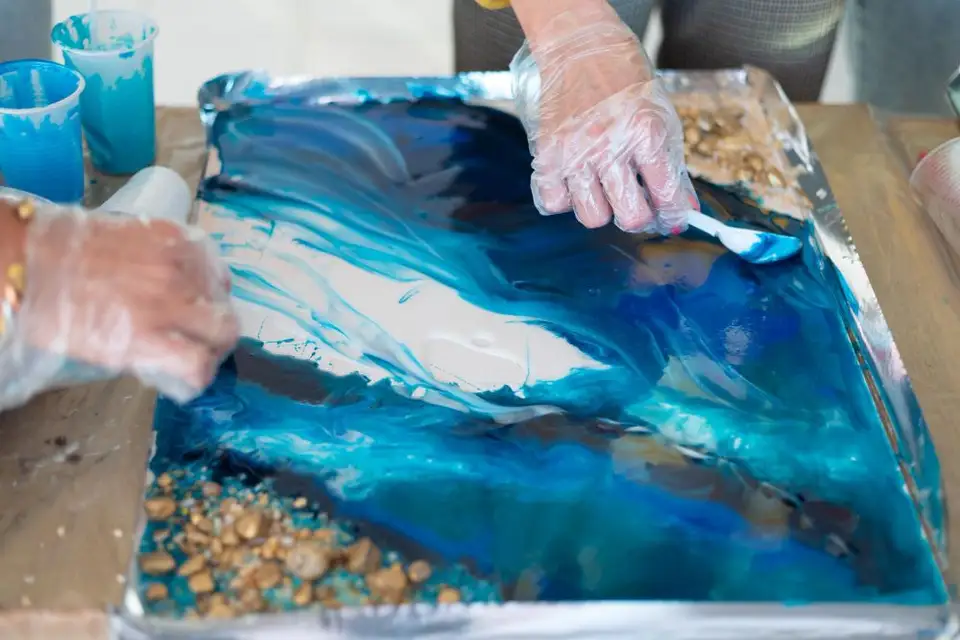
The possibility of incorporating objects, pigments, or textures inside it opened up an almost unlimited creative territory.
As more and more creators experimented, epoxy resin began to gain its identity. It was no longer just a protective layer but an artistic medium in itself. Furniture pieces, decorative objects, jewelry, or even works of art began to integrate this material in a visible and assumed way.
This transition from utilitarian to aesthetic was essential for the status it holds today.
Parallel to this, accessibility also played an important role. With the advent of kits for home use and numerous sources of inspiration in the online environment, more and more people began experimenting with epoxy resin.
Thus, the material moved out of the strictly professional sphere and became part of a larger phenomenon, where individual creativity was encouraged and valued.
Versatility that redefines the limits of design
This flexibility is best seen in furniture. Tables made from wood and epoxy resin have quickly become a symbol of contemporary design. The contrast between the natural texture of the wood and the smooth, sometimes translucent surface of the resin creates a powerful visual effect.
Each piece is unique because the wood grain and the way the resin is poured cannot be replicated identically.
At the same time, resin allows for the integration of elements that would normally not be part of a functional object. Stones, shells, leaves, metallic pigments, or even pieces of metal can be included in the composition, transforming objects into true visual stories. This ability to combine different elements harmoniously has contributed greatly to the popularity of the material.