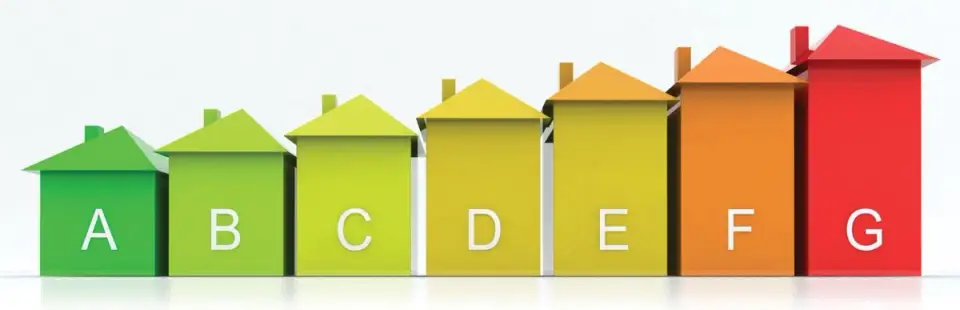
The Energy Performance Certificate for buildings is an essential document for evaluating the energy performance of a building or part of a building (building unit).
This document classifies the building under analysis into an energy class, providing insight into its energy consumption.
Why do we need the Energy Performance Certificate for buildings?
It is also required for buildings owned by or administered by public authorities or institutions providing public services, those with a total usable area of over 250 m2 occupied by a public authority and frequently visited by the public.
It must be obtained before posting real estate advertisements for sale or rent, as advertisements must contain a series of information extracted from this document (to avoid being fined).
How to obtain an Energy Performance Certificate?
contact an accredited energy auditor for buildings;
provide the energy auditor with that information and documents (in copy) regarding the building or building unit to be analyzed, such as (where applicable): the building plan, construction details, year of construction and apartment sketch, etc.
The energy auditor will conduct a site visit to perform the necessary measurements and observations, after which they will issue the certificate.
How much does an Energy Performance Certificate cost? Prices for an Energy Performance Certificate vary depending on the size and complexity of the dwelling, and can be freely set by each auditor.
For buildings in Bucharest and Ilfov, Reflex Architecture SRL Bucharest currently charges 250 lei for apartments and studios, prices starting from 400 lei for houses (depending on surface area and complexity), while prices for other categories of buildings are negotiable.
Validity of the Energy Performance Certificate
ergy Audit
New buildings must meet the NZEB standard (Nearly Zero-Energy Buildings).
Exceptions to the obligation to obtain an Energy Performance Certificate for buildings
buildings and monuments protected which are either part of protected built areas, according to the law, or have a particular architectural or historical value, to which, if the requirements were applied, their character or exterior appearance would be unacceptably modified;
buildings used as places of worship or for other religious activities;
temporary buildings intended to be used for periods of up to 2 years, industrial areas, workshops and non-residential agricultural buildings that require low energy consumption;