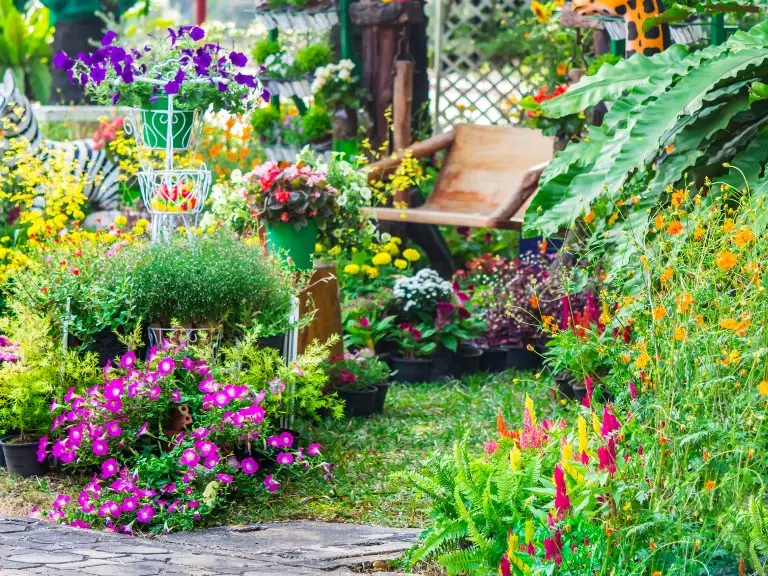
For many of us, a beautiful garden, full of color and life, represents a personal corner of paradise. However, the prospect of countless hours of work required for its maintenance can often discourage us. The good news is that the dream of a self-caring garden, or at least one that requires minimal effort from us, is not a utopia.
With intelligent planning and an approach inspired by nature, we can create a lush and harmonious green space that offers us more time for relaxation and contemplation than for weeding and watering.
Why choose a low-maintenance garden?
The main advantage of a largely self-sustaining garden is, obviously, the considerable reduction in time and physical effort allocated. This translates into more moments of joy spent actually in the garden, admiring its beauty, rather than being overwhelmed by tasks.
Moreover, such a garden is often more sustainable, promoting local biodiversity and reducing the need for chemical interventions or excessive water consumption. It is an approach that works in harmony with natural cycles, not against them.
The Fundamental Pillars of an Almost Autonomous Garden
Creating a low-maintenance garden is based on a few key principles, which, once implemented correctly, will ensure long-term success.
Strategic plant selection: adaptability and longevity The selection of plants is perhaps the most important aspect. The secret lies in choosing perennial species that return year after year without needing replanting and are perfectly adapted to local pedoclimatic conditions (soil type, sun exposure, precipitation regime).
Native plants are an excellent choice because they are already accustomed to the environment and are therefore more resistant to diseases and pests. Opt for flowers that bloom in different periods of the year to ensure a continuous chromatic spectacle.
Plants such as echinacea, aster, creeping thyme, garden carnations, peonies, lion's mouth, or aromatic plants like lavender, mint, and thyme are excellent options. For roses, choose wild or garden varieties that are less demanding than grafted ones. Ground cover plants are also reliable allies, forming a dense carpet of vegetation that suffocates weeds.
Soil: the foundation of garden health and vitality A healthy and well-prepared soil is essential. Before planting, thoroughly clean the ground of weeds and unwanted plant roots. Investing in good quality soil or enriching existing soil with organic compost will provide plants with the nutrients they need for vigorous growth.