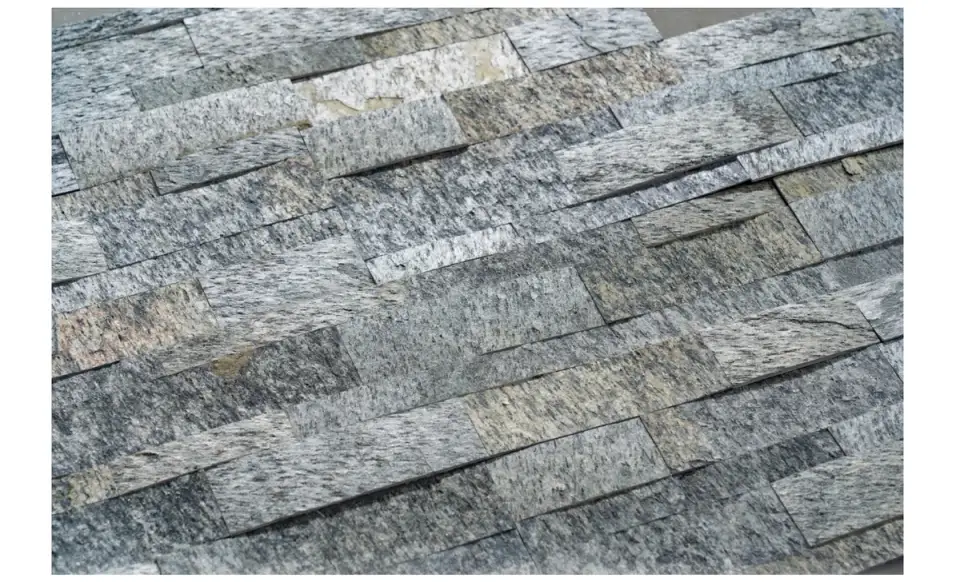
Flexible slate stone is a revolutionary innovation in the field of construction materials and interior design, offering a practical and aesthetic solution for projects involving curved surfaces and complex designs.
Manufactured by detaching thin layers of natural slate from large blocks of stone and applying them to a flexible backing, this stone retains the natural beauty and durability of traditional slate, but with the added advantage of flexibility.
Here are the benefits of using flexible slate stone, its applicability in complex designs, and how it can transform modern spaces.
One of the greatest advantages of flexible slate stone is its versatility. Being extremely thin and lightweight, with a thickness of only a few millimeters, this stone can be applied to a variety of surfaces, including walls, ceilings, furniture, and even floors.
Its remarkable flexibility allows for use on curved surfaces and in complex architectural designs where traditional materials could be difficult or impossible to use. For example, flexible slate stone can be used to clad columns, spiral staircases, or undulating facades, adding a natural and sophisticated look to these design elements.
Furthermore, due to its reduced weight, installation is easier and faster, reducing both labor costs and the time required to complete the project.
Durability is another strong point of flexible slate stone. Although thin and lightweight, it retains all the strength and durability properties of natural slate. It is resistant to water and extreme temperature variations, making it ideal for use both indoors and outdoors.
Its resistance to scratches and impacts makes it suitable for high-traffic areas such as hallways, bathrooms, and kitchens. Moreover, maintenance is minimal; Stoneflex's flexible slate stone can be easily cleaned with water and soap or mild cleaning solutions, maintaining its impeccable appearance over time.