In a modern kitchen, comfort is not limited to design or the latest generation of appliances. An essential element, often overlooked, is the kitchen hood. It not only eliminates unpleasant odors but also actively contributes to maintaining clean air free of grease and steam.
Whether you cook on a gas stove or an electric one, the hood is a reliable ally in any recipe.
At its core, a kitchen hood works by aspirating air from the cooking area, filtering it, and then exhausting it outside or recirculating it indoors. External exhaust models are more efficient at removing odors, while recirculation models are ideal for apartments where an external connection cannot be made.
In both cases, the hood's motor creates a negative pressure zone that attracts contaminated air, passes it through filters, and directs it according to the chosen system.
There are several types of kitchen hoods on the market, each with its own characteristics. The right choice depends on the available space, cooking style, and aesthetic preferences. A decorative hood is preferred in spacious kitchens, where design matters as much as functionality.
Mounted above the cooking area, it becomes a visual focal point and an efficient tool for removing steam. With a powerful motor and washable metal filters, the decorative hood is perfect for gas stoves, especially when preparing dishes that require intense frying.
For smaller spaces, a telescopic hood is an inspired choice. Integrated into the kitchen furniture, it extends only when in use, automatically activating the aspiration system. It's discreet, efficient, and ideal for small apartments.
Although it can be used with any type of stove, it is important to check the absorption capacity in the case of a gas stove, as steam and odors are more intense.
The simple hood, also known as the standard hood, is the most affordable option. With mechanical or touch buttons, it offers basic functions but sufficient for daily cooking. It is easy to install and maintain, and the metal filters can be cleaned periodically.
Despite its simplicity, a kitchen hood of this type can handle culinary challenges with ease, especially if chosen according to the size of the space.
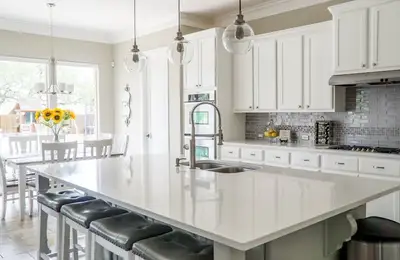
An increasingly popular concept in modern designs is the hob-integrated hood. Unlike classic models, it is not mounted above the cooking area but is incorporated directly into the hob surface, offering a minimalist look and greater freedom in configuring furniture.
It is an ideal solution for kitchen islands or spaces where you want to eliminate suspended units.
The operating mechanism of a hob-integrated hood is based on aspirating steam and odors directly from the area where they are formed. Instead of waiting for hot air to rise, the system captures vapors immediately as they are released, through slots or grilles positioned between burners or induction zones.