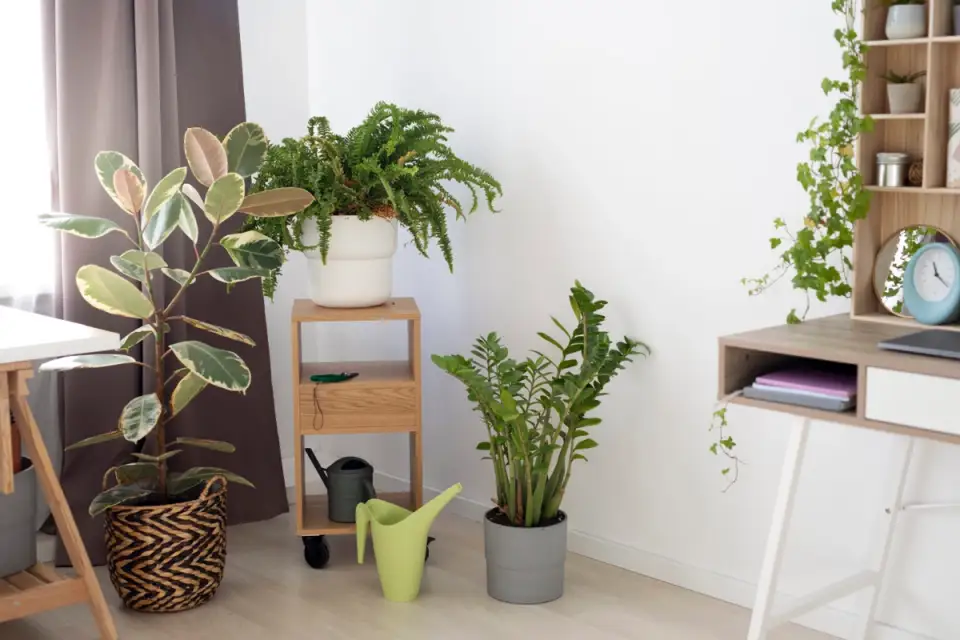
A room dedicated to plants is a dream come true for indoor plant lovers. It not only allows you to enjoy a small green oasis inside your home but also provides the ideal conditions for plant growth and care.
In this article, you will discover how to create a special room for plants, taking into account essential factors such as lighting, humidity, ventilation, and space organization.
Choosing the Right Space for Your Plant Room
A bright room with large windows: Choose a room with plenty of natural light, preferably with windows facing south or east to provide plants with the necessary amount of sunlight.
An enclosed veranda or covered balcony: If you have a covered balcony or an enclosed veranda, these can be transformed into an ideal green space for plants.
An unused room or a dedicated corner: Even a smaller room or a corner can be transformed into a plant space as long as you can ensure the appropriate conditions.
suring Adequate Lighting
Lighting is one of the most important factors to consider when creating a plant room. Plants need light for photosynthesis, and each type of plant has different requirements regarding the amount of light.
Natural Light: If you have a room with large windows, make the most of natural light. Plants that prefer direct sunlight can be placed near the window, while plants that need indirect light can be placed further away.
Artificial Lighting: If natural light is insufficient, use grow lights that mimic the spectrum of sunlight. Opt for LED lights, which are energy-efficient and have a long lifespan.
Timer for Grow Lights: Install a timer to control the duration of light exposure for plants. Most plants need approximately 12-16 hours of light per day.
Managing Humidity and Ventilation
Humidity and ventilation play a crucial role in plant health. Many tropical plants, for example, prefer high humidity, while ventilation helps prevent mold and pests.
Humidifier: If you have plants that require high humidity, such as ferns, orchids, or tropical plants, a humidifier is essential to maintain the optimal humidity level.
Hygrometer: Use a hygrometer to monitor the humidity level in the room and adjust the humidifier accordingly.
Good Ventilation: Ensure adequate air circulation to prevent excessive moisture buildup. You can install a ceiling fan or a floor fan to help circulate the air.
Creating an Efficient Irrigation System
A well-organized irrigation system can save time and ensure that plants receive the correct amount of water.