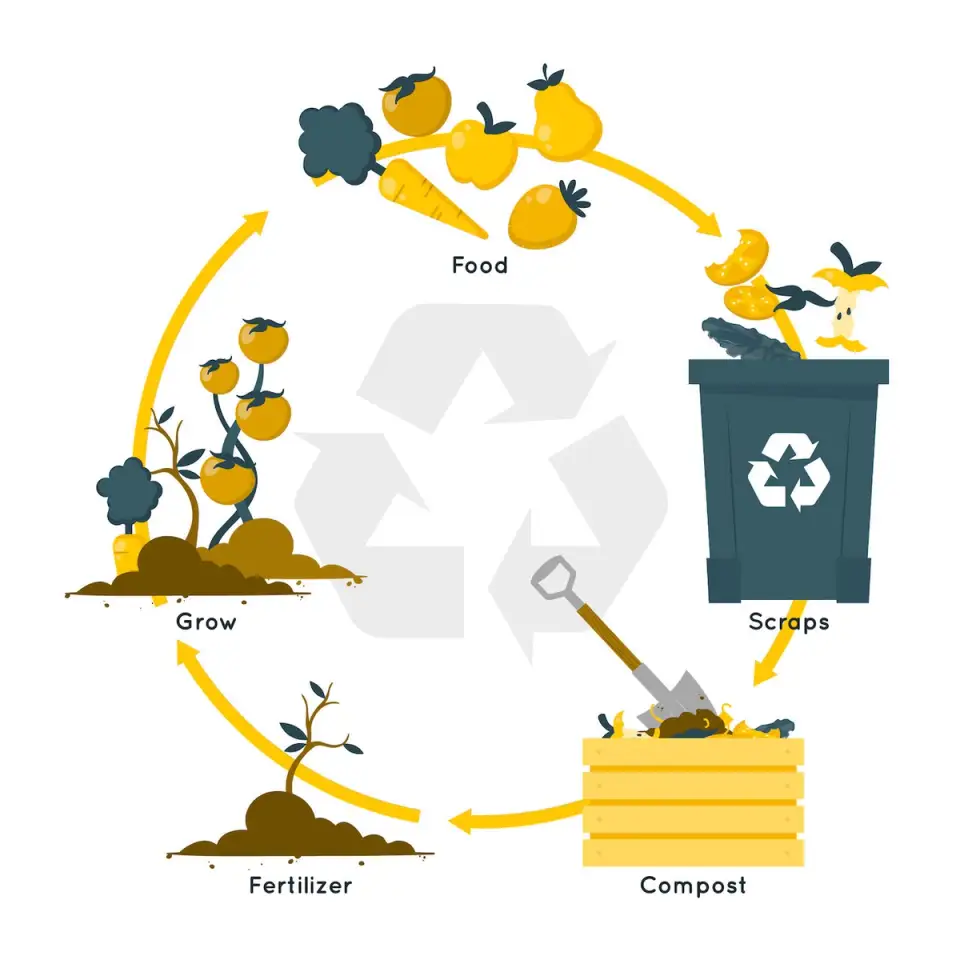
Sustainable gardening involves using natural resources responsibly, reducing waste, and recycling materials to create a healthy environment. Through simple methods, such as composting organic waste and using recycled materials, you can transform your garden into an eco-friendly space.
How to Compost at Home
Compost is one of the most effective ways to reduce organic waste and create natural fertilizer for your garden. Here are the simple steps to start composting:
Choosing a Location for Your Compost Select a shady, well-drained spot in your garden. You can use a free corner of the garden or a special compost bin.
If you live in an apartment, there are compact indoor composting systems available.
What Materials You Can Use Green waste: Vegetable and fruit scraps, grass clippings, faded flowers. These are rich in nitrogen and help with decomposition.
Brown waste: Dried leaves, shredded twigs, cardboard, eggshells. These are rich in carbon and balance the process.
Avoid: Meat, dairy products, oils, or diseased plant debris, which can attract pests or cause unpleasant odors.
The Composting Process Alternate layers of green and brown materials.
Keep the compost moist but not overly wet, and aerate it periodically by mixing. Aeration speeds up decomposition and prevents unpleasant odors.
In a few months, you will obtain nutrient-rich compost, ideal for fertilizing your garden or houseplants.
Benefits of Compost Improves soil quality, increasing water retention and aeration.
Eliminates the need for chemical fertilizers.
Reduces organic waste that would otherwise end up in landfills.