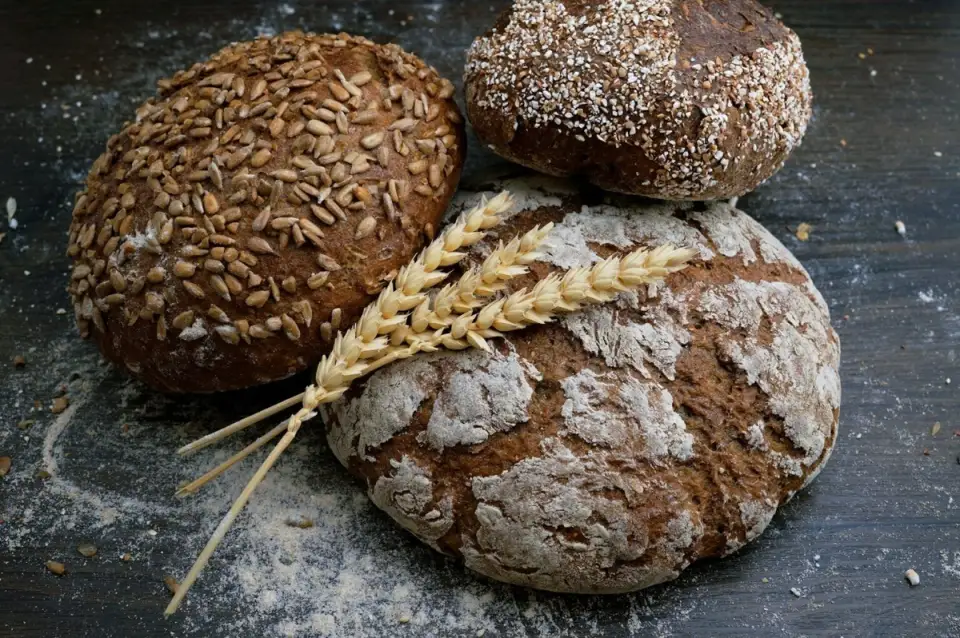
Homemade bread and ciabatta represent two of the most beloved types of baked goods that you can prepare in your own kitchen, each with its own unique characteristics and techniques.
If you've ever wondered what exactly differentiates these two types of bread and how you can achieve bakery-quality results right at home, this article will reveal all the secrets necessary to become a true master of home baking. Let's see how we do it!
Classic Bread Recipes for Home Baking
Making bread at home starts with understanding the basic ingredients and processes. For a traditional Romanian bread, you will need white wheat flour, lukewarm water, yeast, salt, and a tablespoon of sugar to activate the yeast.
The preparation process involves mixing the ingredients in a large bowl, kneading the dough for 10-15 minutes until it becomes elastic and smooth, then letting it rise in a warm place for about an hour, until it doubles in volume.
The secret to successful bread lies in respecting the rising time and controlling the temperature. The dough should be warm but not hot, so that the yeast activates properly. After the first rise, the dough is kneaded lightly again, shaped into the desired form, and left to proof a second time, this time for 30-40 minutes.
Baking is done at 200 degrees Celsius for 35-45 minutes, until the bread turns golden brown and sounds hollow when tapped on the bottom. Traditional bread is usually served with butter, cottage cheese, honey, or jam for breakfast, and it pairs excellently with Romanian soups and stews for main meals.
Its dense texture makes it perfect for absorbing sauces and flavors of the dishes it accompanies. Well, we are Romanians and we love bread, if it's warm and homemade, we eat it plain too!
Italian Ciabatta: Techniques and Tricks for Perfection