Lighting, often underestimated, plays an essential role in creating a pleasant and functional atmosphere in a room. Light can completely transform a space, emphasizing certain architectural features, creating the illusion of space, or setting the desired mood.
How does light influence the atmosphere?
Perception of Space: Light can make a room appear larger or smaller, taller or shorter. For example, indirect lighting can create the illusion of a larger space.
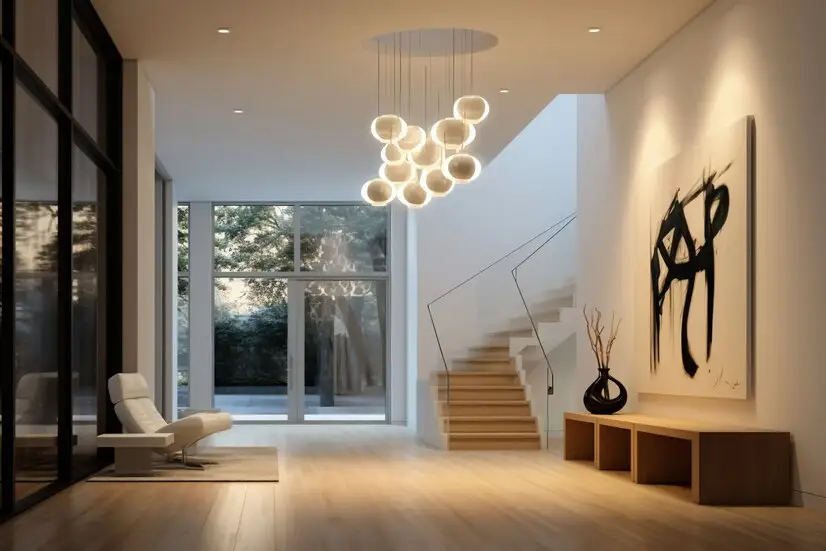
Highlighting Details: Spotlights or LED strips can be used to highlight certain architectural elements or decorative objects, adding personality to the space.
Creating Focal Points: A unique lighting fixture can become the focal point of a room, drawing attention to a particular corner.
Influencing Activities: The type of lighting influences the activities carried out in a room. Strong and uniform light is ideal for reading or working on a computer, while ambient light is perfect for relaxation.
Types of Lighting and Their Roles
Accent Lighting: Highlights specific areas or objects and is provided by spotlights, LED strips, or wall sconces.