In a world of increasingly competitive business, the office is no longer just a headquarters. The office becomes a business card, a vibrant environment that reflects the company's values. After the pandemic, remote work has become normality for many companies, and now the physical office is undergoing a major transformation. It is no longer just a workspace, but a strategic element for strengthening socialization.
A well-designed space not only motivates employees but also creates a strong impression on visiting clients. An effective way to create a powerful visual and emotional impact is to integrate nature into the interior design.
Why is the integration of natural elements recommended?
It creates a relaxing atmosphere for employees, which contributes to increased productivity and well-being.
Green spaces can become visual identity elements for clients.
Studies show that integrating nature into offices improves productivity, creativity, and overall brand perception.
Integrated Nature, Not Just Plants The modern concept of small gardens does not just mean placing a few decorative plants. Integrating nature into offices involves smart, coherent, and functional solutions that transform natural elements into an organic part of the interior design.
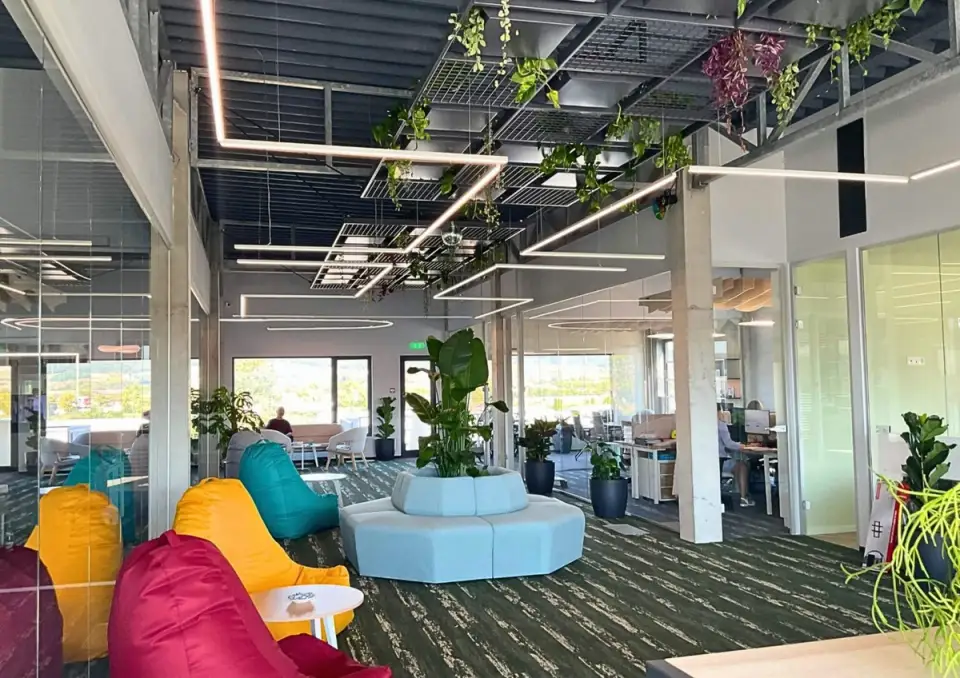
These compact gardens integrated into furniture or placed on the ceiling are designed to maximize visual impact without occupying usable space. Green areas create a harmonious atmosphere, improve air quality, and contribute to visual identity.
By using landscaping elements adapted to the interior, small gardens become a design element in themselves, not just a decorative addition.
Areas where indoor gardens can be integrated
Reception – the first point of visual contact where the first impression is created.