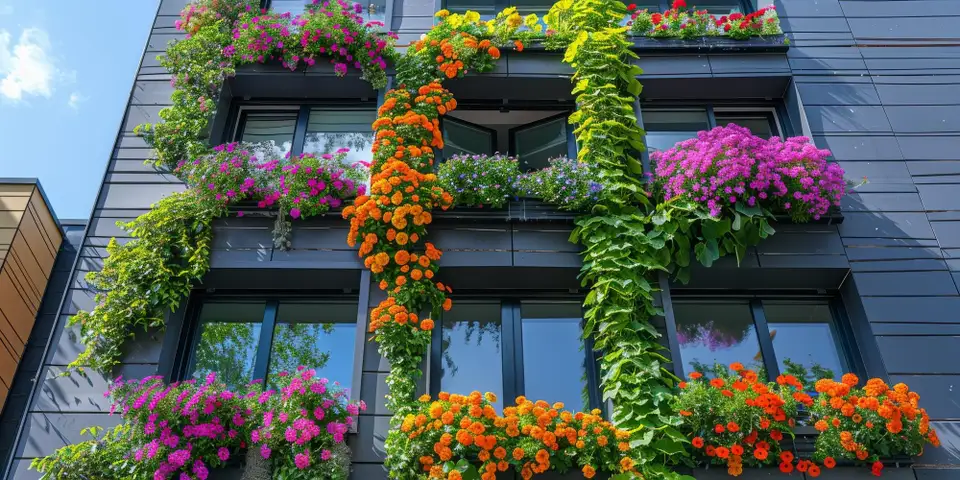
For those living in apartments or with small yards, a vertical garden is the perfect solution to bring a touch of greenery and freshness. These gardens are not only visually appealing but also extremely efficient, allowing you to use space creatively and enjoy plants even in confined areas.
Here's a complete guide on how to create your own vertical garden on a wall or balcony, with tips on choosing plants, mounting systems, and maintenance.
1. Choosing the Right Plants
Succulents: These are ideal for vertical gardens as they require infrequent watering and thrive in small spaces. Examples include echeveria, crassula, and haworthia.
Herbs: Plants like basil, thyme, rosemary, or oregano are perfect if you want an edible garden at hand on your balcony. They require little space and are relatively easy to maintain.
Ivy and ferns: These plants are decorative and suitable for vertical gardens, especially if your garden is located in a partially shaded area.
Flowering Plants: Flowers such as pansies, carnations, or petunias can add a splash of color to your vertical garden, creating a vibrant and welcoming look.
2. Vertical Garden Mounting Systems There are several options for mounting a vertical garden, from DIY solutions to specially designed systems. The choice depends on your budget, available space, and the type of plants you want to grow.
Wooden Panels or Pallets: This is one of the most popular DIY solutions. A wooden pallet can be mounted on the wall and filled with plants, offering a rustic and natural look. Attach pots directly to the pallet or create small boxes for planting.